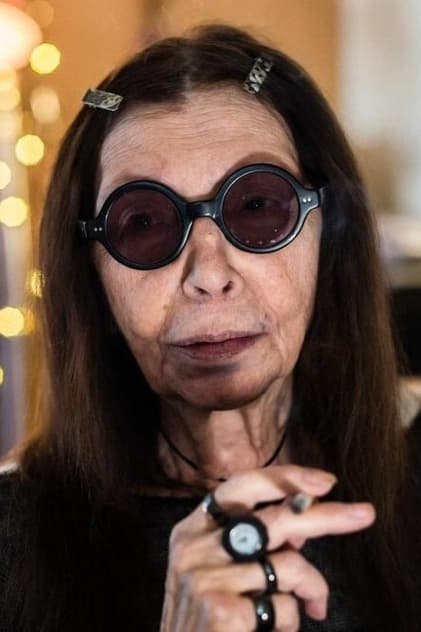
Brigitte Fontaine
Biography
Brigitte Fontaine, (born 24 June 1939) is a singer of avant-garde music. She has employed numerous unusual musical styles, melding rock and roll, folk, jazz, electronica, spoken word poetry, and world. She has collaborated with Stereolab, Michel Colombier, Jean-Claude Vannier, Areski Belkacem, Gotan Project, Sonic Youth, Antoine Duhamel, Grace Jones, Noir Désir, Archie Shepp, Arno, and The Art Ensemble of Chicago. She is also a novelist, playwright, poet, and actress.
The daughter of two teachers, Brigitte Fontaine developed her taste for writing and drama very early. She spent her childhood in small villages of Finistère, then in Morlaix. At 17 years old, she moved to Paris to become an actress.
In 1971, she was one of the women who signed the Manifesto of the 343, publicly admitting to having an abortion at a time when it was illegal in France.
In 1963, she turned to singing and appeared in several Parisian theatres, interpreting her own works. In 1964, she opened for Barbara and George Brassens's show at the Bobino. Even so, she did not give up theatre. With Jacques Higelin and actor Rufus, she created the play Maman j'ai peur ("Mom I am afraid"), which played first at the Vieille-Grille theatre, and then at the Théâtre des Champs-Élysées. It met with such a critical and popular success that it stayed in Paris for more than two seasons and toured throughout Europe.
In 1965 and then in 1968, she made two albums, one jazz and one avant-pop, as well as two 45s with Jacques Higelin. In 1969, she began what would be a long collaboration with Kabyle musician Areski Belkacem. With Belkacem and in the company of Higelin, she conceived Niok, an innovative spectacle of theatre and song, for the Lucernaire theatre. Soon after, Fontaine wrote a series of works in free verse and prose which comprised the show Comme à la radio at the Théâtre du Vieux-Colombier before being turned into an album of the same name. Recorded with the Art Ensemble of Chicago, this album marks a clean break with traditional French songs, building the first bridges to world music.
Brigitte Fontaine became a major figure in the French underground. In a half-dozen albums, the majority of which were released through the independent label Saravah, Fontaine explored different poetic worlds. She renounced the use of rhyme, and using talk-over sometimes, she recorded, with very little means and often on two tracks, songs which addressed topics with humour or gravity, according to the mood, as various as death ("Dommage que tu sois mort"), life ("L’été, l’été"), alienation ("Comme à la radio"), madness ("Ragilia"), love ("Je t’aimerai"), social injustice ("C’est normal"), the inequality of the sexes ("Patriarcat") and racism ("Y' a du lard"). However, she also knew how to make light of herself ("L'Auberge (Révolution)"). ...
Source: Article "Brigitte Fontaine" from Wikipedia in English, licensed under CC-BY-SA 3.0.
LE GRAND SOIR : Quand Albert Dupontel rencontre Brigitte Fontaine… par Benoît Poelvoorde
VideoKnown For
TV
L'Invité
Self
2002

TV
Taratata
Self
1993
TV
Discorama
Self
1959

TV
Victoires de la musique
Self
1985
TV
Aujourd'hui la vie
Self
1982
TV
Aux arts et cætera
Self
2022
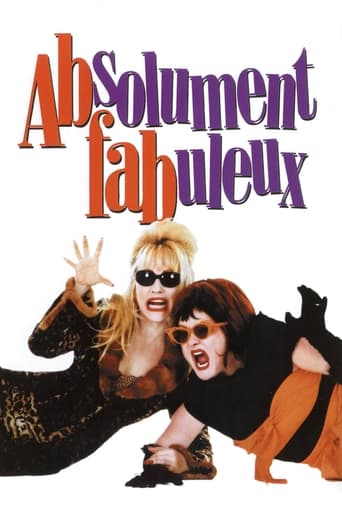
Film
Absolutely Fabulous
Brigitte Fontaine
2001
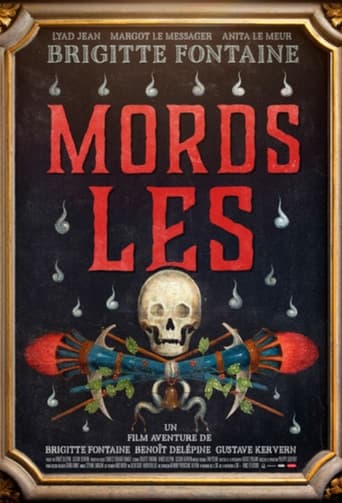
Film
Mords-les !
Diogénie
2020
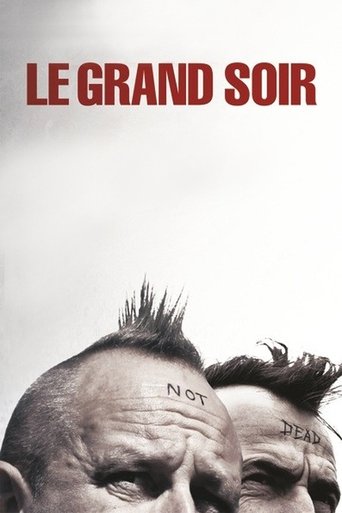
Film
The Big Night
Mother - Marie-Annick Bonzini
2012
Film
Oh Les Filles!
Self
2019

Film
Les Scandaleuses
Self
2024
Film
À mort la mort !
Viviane
1999
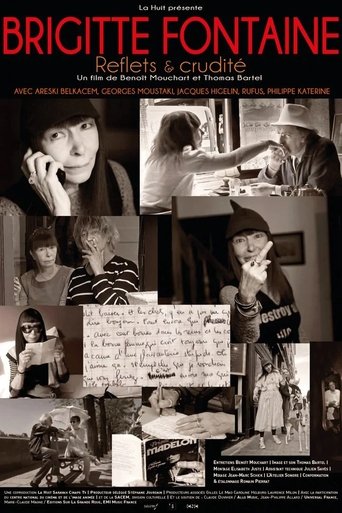
Film
Brigitte Fontaine : Reflets et crudité
Self
2013
Film
The Surrounded
Violaine
1968

Film
Brigitte Fontaine
Herself
1972
Filmography
2024FilmLes Scandaleusesas Self2022TVAux arts et cæteraas Self2020FilmMords-les !as Diogénie2019FilmOh Les Filles!as Self2013FilmBrigitte Fontaine : Reflets et cruditéas Self2012FilmThe Big Nightas Mother - Marie-Annick Bonzini2002TVL'Invitéas Self2001FilmAbsolutely Fabulousas Brigitte Fontaine1999FilmÀ mort la mort !as Viviane1993TVTaratataas Self1985TVVictoires de la musiqueas Self1982TVAujourd'hui la vieas Self1972FilmBrigitte Fontaineas Herself1968FilmThe Surroundedas Violaine1959TVDiscoramaas Self